
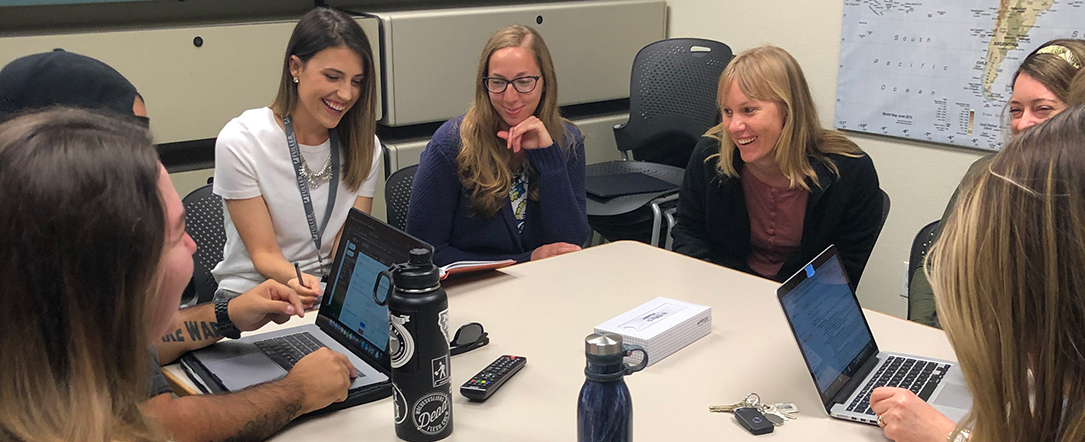
The Headington Research Lab
Office
School of Psychology & Marriage and Family Therapy Dean's Office
Fuller Theological Seminary
180 N Oakland Ave
Pasadena, CA 91101
MISSION
The Headington Program was established by the Headington family of Dallas, Texas. Their generous endowment supports research and consultation directed to the needs of cross-cultural ministry and humanitarian aid workers. Particularly central to the mission of the Headington Program are the topics of traumatic and chronic stress occurring in cross-cultural ministry settings, as well as the resulting challenges to caregiver adjustment.
PROJECT
Inclusion and Diversity in Member Care
Much of the research on missionary care and “Member Care” has focused on the experience of North American or European missionaries moving to settings in the Global East and South. This perspective may limit the resources needed to understand the nuanced experience of mission workers from varying cultural locations. Our next projects will consider diverse voices to explore the impact of cultural identity, humility, historical trauma, justice, and racial trauma on the experiences of secondary trauma and ministry worker well-being. Projects include:
- Literature review on adjustment of those working in activism. How does justice-related work affect activists of different backgrounds? (Jamie Camphouse)
- Staff of an international faith-based ministry organization were assessed for emotional adjustment during COVID-19. Protective factors such as social support and cultural humility will be explored. (Bethany Ferguson)
PROJECT
Trauma Informed Ministry
SAMSHA (2014) introduced the construct of “Trauma-Informed Care” as a way to influence service provision across sectors. Ministry leaders can create trauma-informed ministry by understanding the common reactions to trauma, the need for survivor empowerment, the impact of historical and cultural factors, and the primary need for safety. The lab has worked on projects related to this in a number of areas:
- Literature review of trauma-informed care and qualitative analysis of ministry workers’ report of support of survivors in their ministry settings. (Kacey Krotz)
- Trauma, Resilience, and Marginalized populations: Researching and developing trauma informed ministry resources to increase physiological and emotional regulation for formerly incarcerated individuals (returning citizens) and communities impacted by racial trauma. (Lauren VanVranken)
- A resource adaptation for a Los Angeles-based organization that aims to increase peer support and resilience in ministry volunteers exposed to community violence and vicarious trauma. (Hannah Lankheet)
- Trauma informed ministry in context. Looking at what the literature says about how the Black Church can respond to community violence. (Sarah Hill)
PROJECT
Risk and Resilience in High Stress and Ministry Contexts
Aid workers, mission workers, first responders, and urban ministry workers have chosen to work in environments that include both chronic and potentially traumatic stressors. By the very nature of the work, they are confronted with suffering, but they work to improve the lives of others. These research projects seek to identify the ways that certain personal, organizational, and contextual factors may contribute to better or poorer outcomes. Projects include:
- Longitudinal study examining various factors of organizational stress and resilience across an aid worker’s time of deployment (Melissa Beth Huston).
- Researching and exploring the risk and resilience factors of mission worker and first responder families in high stress environments. The project includes in depth interviews with the participants and assessing the data using Froma Walsh’s Family Resilience Model. (Abby Schmidt and Brenna Hastings)
- Investigation into urban ministry workers’ attitudes and psychological adjustments (Robert Craig).
- Review of the literature regarding Military Chaplain stressors and interventions used to increase chaplain well-being in various contexts. Recommendations for addressing the unique strengths and challenges of military chaplains. (Samantha Jones)
PROJECT
International Trauma
Trauma may be a common experience, but each cultural context has its own unique resources and risks for survivors. Research projects can inform local efforts for resilience and recovery through partnerships with local agencies to provide nuanced understanding of the specific experiences of survivors in the area. Projects include:
- Few studies have focused on the Kenyan Immigrant community in the US to understand their experience of distress and how they cope. This research projects seek to o examine the relationship between Kenyan immigrants’ religious views of suffering and their beliefs about the causes of psychological distress, their reporting of mental health distress, coping behaviors, as well as the utilization of emotional, relational, spiritual and physical resources. (Anne Wangugi, Laura Olear, and Sara Saad)
- Looking at the specific impact of terrorism on internationally displaced persons as well as the unique expression of cultural trauma and grief in Jos, Nigeria. (Patience Ahmed and Drea Canales)
SELECTED PUBLICATIONS
1. Eriksson, C. B., Holland, J. M., Currier, J. M., Snider, L. M., Ager, A. K., Kaiser, R., & Simon, W. S. (2015). Trajectories of spiritual change among expatriate humanitarian aid workers: A prospective longitudinal study. Psychology Of Religion And Spirituality, 7(1), 13-23. doi:10.1037/a0037703
2. Ferguson, B., Eriksson, C. B., Craig, R., & Wangugi, A. (2023). Staying at home while far from home: Experienced social support and cultural humility for cross-cultural ministry workers during COVID-19, Journal of Psychology and Theology. 52(1), 37-51. DOI: 10.1177/00916471231200574
3. Greene-Cramer, B. J., Hulland, E. N., Russell, S. P., Eriksson, C. B., & Lopes-Cardozo, B. (2020). Patterns of posttraumatic stress symptoms among international humanitarian aid workers. Traumatology. https://doi-org.fuller.idm.oclc.org/10.1037/trm0000286
4. Krotz, K., Eriksson, C., Craig, R., Rommen, J., & Lankheet, H. (2019). Trauma-informed ministry: A framework and recommendations. Poster presented at the 35th Annual Meeting of the International Society for Traumatic Stress Studies, Boston, MA.
5. Noll, A. L., Stevenson, K., Cárdenas-Rodríguez, A., Soltero, V., Salvatierra, A. & Eriksson, C. B. (2021, November). Latinx millennials' mental health needs and resiliency factors: A needs assessment for Matthew 25's Puente. Poster Presentation at the International Society of Traumatic Stress Studies 37th Annual Meeting. (Conference was held online due to COVID-19).
6. Qing, Y., van Zuiden, M., Eriksson, C., Lopes Cardozo, B., Simon, W., Ager, A., Snider, L., Lewis Sabin, M., Scholte, P., Kaiser, R., Rijnen, B. & Olff, M. (2020). Cortisol awakening response over the course of humanitarian aid deployment: a prospective cohort study. European Journal of Psychotraumatology, 11(1), DOI: 10.1080/20008198.2020.1816649
PEOPLE
Faculty
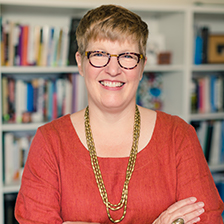
Cynthia Eriksson
Dean, School of Psychology & Marriage and Family Therapy
Professor of Psychology
BA, WHEATON COLLEGE
MA, PHD, FULLER THEOLOGICAL SEMINARY
Students
Lauren Van Vranken, PsyD 2026
Abby Schmidt, PsyD, 2026
Brenna Hastings, PsyD, 2026
Tiffany Schupanitz, PsyD, 2026
Ally Pfaff, PsyD, 2027
Hannah Springer, PsyD 2027
Laura Olear, PhD, 2028
Logan Schnieider, PsyD, 2028
Gabe Espana, PsyD, 2028
Esther Yao, PsyD, 2028
Kris Levesque, PhD, 2029
CONFERENCE PHOTOS



Contact Us
phone: 626.584.5544
email: [email protected]
Staff
Nicole DeCamp
Research and Grant Administrator
[email protected]
Address
180 N Oakland Ave
Pasadena, CA 91101