Jose Abraham
Associate Professor of Islamic Studies
BS, St. Thomas College, Kozhencherry, Kerala
MA, United Theological College, Bangalore
PhD, McGill University, Montreal
Courses Taught
MR550: Introduction to Islam
MR574: Cultures of Muslim Societies
SF503: Living Missiologically
MH506: The Making of Global Christianity
MI804: Doctoral Seminars in Missiology
MI809: Doctrinal Seminars in World Christianity
Independent Studies in Islamic Studies, South Asian history, and Missiology
Areas of Expertise
Culture, history, and religion on Mappil Muslims of Kerala
Islamic studies and world religions
Christian–Muslim relations and interfaith engagement
Global Christianity and Pentecostal movements
Missiology and theology of religions
South Asian history and Dalit theology
Religious responses to ecological crisis
Bio
Jose Abraham serves as associate professor of Islamic studies in the School of Mission and Theology at Fuller Theological Seminary, where he has taught since 2020. He grew up in Kerala in South India, a region home to some of the world’s most ancient Christian and Muslim communities, whose religious diversity and layered histories of colonial encounter continue to shape his understanding of religion, Christian–Muslim relations, and postcolonial inquiry. His academic work engages the intersection of religious studies, missiology, and postcolonial theory, examining how traditions are formed, interpreted, and encountered within conditions of modernity and global exchange. At Fuller, he teaches courses in world religions, Islamic studies, missiology, and World Christianity, seeking to cultivate historically grounded and relationally attentive engagement with religious diversity.
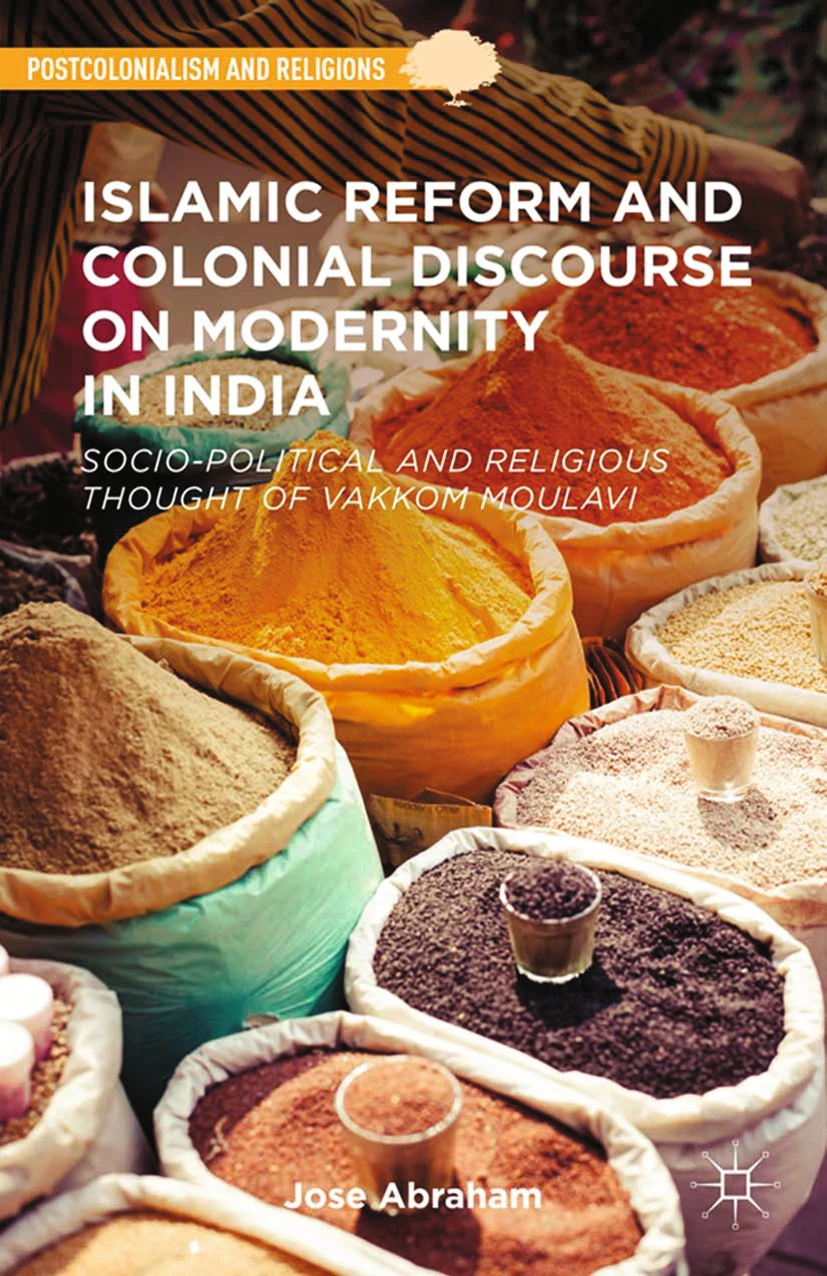
Abraham completed his formal education in India prior to pursuing doctoral studies abroad. He received his PhD from the Institute of Islamic Studies at McGill University in Montreal, where his research examined socioreligious reform movements among the Mappila Muslims of Kerala. His work argued that colonialism must be understood as more than another episode of imperial domination in human history; rather, it introduced European categories, conceptual frameworks, and modes of reasoning into the everyday habits of thought and social imagination of colonized communities, thereby reshaping their understandings of self, religion, society, and nation. Focusing on the writings of Vakkom Abdul Khadir Moulavi—widely regarded as the father of Islamic reform in Kerala—his doctoral research traced how Muslim intellectual life was reconfigured through engagement with colonial modernity. This dissertation was subsequently published as Islamic Reform and Colonial Discourse on Modernity in India: Socio-Political and Religious Thought of Vakkom Moulavi (Palgrave Macmillan, 2014).
Abraham has published his research in national and international academic journals and has presented his work at major scholarly gatherings, including meetings of the American Academy of Religion, the American Society of Missiology, the American Anthropological Association, and conferences on South Asian studies. His current research extends his long-standing engagement with European modernity and the civilizing mission, examining how these intellectual frameworks functioned to justify colonial domination. A forthcoming book (Palgrave Macmillan, 2026) investigates the liberal roots of Orientalism and Islamophobia and considers their implications for decolonizing Islamic studies and Christian–Muslim relations. He also explores the religious and cultural diversity of the Indian subcontinent, examining secularism as a framework for negotiating pluralism and rethinking about mission in religiously diverse societies. In addition, his work on the early history of Pentecostal movements in Kerala employs a bottom-up methodological approach to analyze dynamics of gender, caste, and power in lived religious communities.
Abraham has served as a theological educator since 1995. He taught in the Department of Religion and Culture at United Theological College, Bangalore, from 1999 to 2011, and prior to joining Fuller he spent nearly a decade on the faculty of Concordia University in Montreal, where he taught courses in Islamic studies, South Asian history, anthropology of religion, and Middle Eastern politics. Across these institutional contexts, his teaching has emphasized historical attentiveness, interdisciplinary method, and the practice of deep listening as essential for studying religious traditions. He approaches teaching as a collaborative process that prioritizes engaged learning and critical reflection, seeking to cultivate students’ ability to think independently rather than merely memorize information. Viewing his role as a facilitator of intellectual exploration, he encourages inquiry that continues beyond the classroom.
Abraham is an ordained minister of the Indian Pentecostal Church of God (IPC). Throughout his academic career, he has remained actively engaged in the witness and service of local congregations, integrating pastoral practice with scholarly reflection. He is particularly committed to assisting churches in cultivating biblically grounded approaches to engaging other religious traditions and fostering constructive interfaith relationships within their surrounding communities. His work has also included supporting international students and facilitating small-group Bible studies that nurture reflective faith and communal formation. In addition to his local ecclesial involvement, he continues to contribute to theological education in Asia and Africa as a guest lecturer at various institutions, supporting the formation of leaders navigating complex religious and cultural contexts.
Featured Publications